Narcotic Drugs
Need Expert Support?
Handling NDPS compliance can be challenging. Professional guidance ensures accuracy, efficiency, and peace of mind.
Ensure 100% NDPS Compliance with Expert Guidance
Get in touch with Diligent Associates today and simplify your regulatory processes.

Narcotic drugs play a critical role in modern medicine, particularly in pain management and palliative care. These substances are strictly regulated under the Narcotic Drugs and Psychotropic Substances (NDPS) Act, 1985 to prevent misuse while ensuring their availability for legitimate medical and scientific purposes.
Narcotic drugs include substances such as opium, coca leaf, cannabis (hemp), and their derivatives, along with manufactured drugs derived from these sources.
These substances are widely used in the pharmaceutical industry for their analgesic and therapeutic properties but require strict regulatory control due to their potential for misuse.
What are Narcotic Drugs?
Narcotic Drugs (ENDs) are a category of narcotic drugs specifically notified by the Government of India for medical and scientific use.
These drugs are primarily used in:
- Pain management (especially cancer-related pain)
- Surgical procedures
- Palliative care
The objective of classifying ENDs is to ensure easier access for medical use while maintaining strict compliance and control.
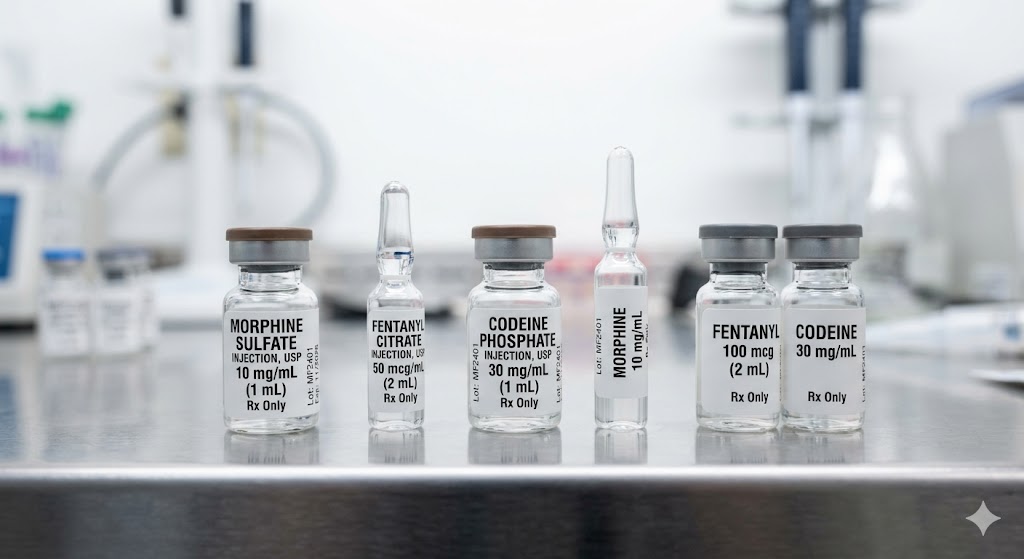
Common Examples
- Morphine
- Codeine
- Fentanyl
- Oxycodone etc

Regulatory Requirements
Activities involving narcotic drugs and essential narcotic drugs are subject to strict regulations, including:
- Licensing for manufacture, possession, and distribution
- Maintenance of detailed records and documentation
- Compliance with storage and handling protocols
- Permissions for transport, import, and export
Both central and state authorities regulate these activities under the NDPS framework.
Importance of Compliance
Non-compliance with NDPS regulations can lead to severe penalties, including fines, suspension of licenses, and legal action.
Ensuring proper compliance helps:
- Avoid legal risks
- Maintain operational continuity
- Build credibility with regulatory authorities

How We Help
Diligent Associates provides expert support in handling regulatory requirements related to narcotic drugs.
Our services include:
- Licensing and approvals
- Regulatory documentation and filings
- SOP development
- Compliance audits and advisory
- Liaison with government authorities
Frequently Asked Questions
Many companies believe that regulations under the Narcotic Drugs and Psychotropic Substances Act, 1985 are extremely strict and complicated. However, the law is mainly designed to prevent abuse and illegal trafficking, not to discourage legitimate medical use. Companies that follow licensing and record-keeping requirements can legally manufacture and market these medicines without difficulty.
Yes. These medicines are completely legal when used for medical or scientific purposes. Hospitals require them for pain management, anesthesia, psychiatric disorders, palliative care, and cancer treatment. The law regulates them to prevent misuse but does not prohibit legitimate pharmaceutical manufacturing or marketing.Provided that a license to manufacture a psychotropic substance specified in Schedule I shall be issued only for the purposes mentioned in Chapter VIIA.
The main regulatory authorities include:
Central Bureau of Narcotics (CBN)
Narcotics Control Bureau (NCB)
State Drug Controllers under the Drugs and Cosmetics Act, 1940
Generally,
Narcotic drugs mainly include substances derived from opium, coca, and cannabis or their derivatives used as painkillers or anesthetics.
Psychotropic substances affect the mind and nervous system and are commonly used in psychiatric treatment.
However, Government of India has published lists of substances falling under both the above categories under the Narcotic Drugs and Psychotropic Substances Act, 1985
No. The process is straightforward for legitimate pharmaceutical companies. Normally the company must obtain:
A Drug manufacturing licence under the Drugs and Cosmetics Act, 1940.
Quota allocation from Central Bureau of Narcotics if the substance falls under the category of narcotic drug.
An export of import authorization from the Central Bureau of Narcotics if the transaction involves export or import.
What is more, said Government Departments are offering completely on-line procedure to apply and obtain licenses in India.
Yes, but the system is simple and transparent. Companies must maintain records for the quantity procured, manufactured, used for R&D or testing, sold or supplied, losses if any and the balance stock
Such records help authorities ensure that the medicines are used only for legitimate medical purposes.
The law imposes strict penalties mainly for illegal trafficking or deliberate diversion. Minor procedural mistakes by licensed pharmaceutical companies are usually handled through corrective measures, warnings, or administrative action, provided there is no intention to misuse the substances.
Yes, demand is increasing due to growing healthcare needs. NDPS medicines are widely used in:
Cancer pain management
Surgical anesthesia
Intensive care treatment
Psychiatric therapy
Palliative care
India has a large patient population, and access to such medicines is still inadequate in many areas, creating opportunities for responsible manufacturers.
NDPS substances are used in many important medicines required in hospitals and clinical practice. These medicines are generally used for severe pain management, anesthesia, sedation, psychiatric disorders, and critical care treatment.
For example:
Morphine and Fentanyl are widely used for severe pain relief, especially in cancer and post-surgical patients.
Diazepam and Alprazolam are commonly prescribed for anxiety, insomnia, and certain neurological conditions.
Tramadol is used as a pain reliever for moderate to severe pain.
Ketamine is used as an anesthetic in surgeries and emergency medicine.
These medicines are essential for modern healthcare and cannot be replaced easily by alternatives.
Yes, there are significant opportunities. Many countries import NDPS medicines from reliable pharmaceutical manufacturers. India already has strong pharmaceutical manufacturing capabilities and can supply high-quality medicines to global markets.
Exports require permits from Indian authorities and import authorization from the destination country.
Exports are usually regulated by the Central Bureau of Narcotics along with other export authorities such as the Drugs Controller General India.
Companies must obtain an export authorization certificate and ensure that the importing country has issued a corresponding import permit.
Not necessarily. If documentation is complete, export permits are normally issued within a reasonable time. Many companies regularly export NDPS medicines using a standard documentation process. The government's online infrastructure makes it more simple.
Yes. Since fewer companies manufacture such medicines due to perceived regulatory complexity, competition is relatively lower. This creates a stable and profitable market for companies that maintain compliance and quality standards.
On the contrary, companies involved in legitimate manufacturing of such medicines contribute significantly to pain relief, palliative care, and mental health treatment. Many globally respected pharmaceutical companies produce these medicines responsibly.
Yes. The Government of India has taken several steps to improve patient access to pain relief medicines and simplify procedures under the Narcotic Drugs and Psychotropic Substances Act, 1985. These reforms encourage hospitals and manufacturers to ensure availability of essential medicines. Simplification of regulatory complexities for Essential Narcotic Drugs like Morphine, Fentanyl , Codeine etc is one such initiative of Government of India.
Companies should focus on four basic principles:
Licensing – obtain required approvals.
Security – maintain controlled storage.
Documentation and reporting – maintain accurate records and submit Returns to the Government as prescribed.
Transparency – cooperate with regulators.
Following these principles ensures smooth and lawful operations.
The biggest misconception is that the regulatory system is too risky or complicated. In reality, the framework under the Narcotic Drugs and Psychotropic Substances Act, 1985 is structured, transparent, and designed to support legitimate medical use while preventing misuse. Companies that follow the rules can confidently operate and even expand into international markets.